By Dr. John Crimmins, PhD-level Psychotherapist and Founder of The Behaviour Institute.
What is CBT in the Classroom?
CBT classroom management techniques in an educational setting is a structured, evidence-based approach that teaches students to identify and modify the thoughts and behaviors that impact their learning and social interactions.It shifts the classroom focus from external discipline to internal student self-regulation.
How Can CBT Help Students in the Classroom?
While traditional classroom management often relies on external rewards and punishments, Cognitive Behavioral Therapy (CBT) empowers students with internal self-regulation. By teaching students “how to think” rather than “what to think,” CBT provides a sustainable way to manage conduct and nurture emotional health.
Common Student Challenges Addressed by CBT:
Behavioral Issues: Aggression, bullying behaviors, and attentional difficulties.
Anxiety & Phobias: Social phobia, panic disorders, and performance anxiety (e.g., test-taking).
Emotional Well-being: Low self-esteem, withdrawal, and sleep-related problems.
Compulsive Patterns: Obsessive behaviors and rigid classroom rituals.
The Role of “Self-Talk” (Covert Self-Instruction)
A core component of classroom CBT is Self-Talk. This involves teaching students to use internal dialogue to solve problems or guide their behavior in real-time.
Key Difference: Unlike external reinforcement (tokens or praise), CBT focuses on Self-Control. It shifts the student from being managed by the teacher to managing their own underlying thinking patterns.
Evidence-Based Research: Why CBT Works in Schools
The transition of Cognitive Behavioral Therapy from clinical settings to the classroom is backed by significant academic research. Key studies by Stephen W. Smith, Ph.D. and Ann P. Daunic, Ph.D. have consistently demonstrated that when educators integrate cognitive-behavioral strategies, student behavior improves significantly.
Clinical Origins and Proven Efficacy
Originally developed for clinical psychiatry and psychology, CBT is now a gold-standard intervention in hospitals, residential care, and outpatient clinics. Its success in treating complex conditions has led to its high “transferability” into school settings.
CBT is clinically proven to assist with:
Anxiety & Mood: Social phobia, panic disorders, and depression.
Behavioral Regulation: ADHD, anger management, and aggression.
Complex Needs: OCD, eating disorders, and substance dependency.
Dr John Insight: The effectiveness of CBT in schools stems from its ability to provide students with a “portable” skillset—tools they can use in the hallway, the playground, and the classroom without needing constant adult intervention.
Time limited offer
Get 3 of our courses for the price of one!
✔️ Receive training in all the major schools of psychology.
✔️ You can do the courses one at a time! You can even gift one to a colleague.
✔️ A Diploma Certificate is awarded for each course successfully completed.
✔️ There is no time limit for completion – take your time and enjoy the learning.
What are the Benefits of CBT Interventions for Teachers?
The primary advantage of CBT in an educational setting is the shift from Teacher-Operated systems to Student-Operated self-regulation. While traditional classroom management relies on external control, CBT empowers the student to manage their own internal state.
Teacher-Operated vs. Student-Operated Systems
Feature
Traditional Management
CBT-Based Interventions
Primary Driver
External Rewards/Punishments
Internal Self-Control
Teacher Role
Monitoring and Disciplining
Coaching and Facilitating
Student Role
Reactive (Compliance)
Proactive (Self-Regulation)
Long-Term Goal
Immediate Obedience
Sustainable Behavioral Change
How CBT Reduces Teacher Burnout
By shifting the responsibility of behavioral management to the student, CBT interventions provide three specific supports for the educator:
Decreased Constant Monitoring: Once a student learns to identify their own “triggers,” the teacher spends less time on “policing” and more time on instruction.
Instruction on “How-to-Think”: CBT gives teachers a pedagogical framework to teach emotional intelligence, rather than just reacting to outbursts.
Generalization of Skills: Unlike a “token economy” which often only works in one classroom, the cognitive skills students learn through CBT travel with them to the playground, the lunchroom, and home.
The Science of CBT: How Thoughts Rewire the Brain
Cognitive Behavioral Therapy is grounded in the principle of Neuroplasticity—the brain’s ability to reorganize itself by forming new neural connections. While “cognitive” simply refers to our thoughts, CBT is the practical application of changing those thoughts to influence our emotions and behaviors.
Can You Actually Change Your Brain?
Yes. When we consistently modify our thought patterns, we are physically rewiring the brain’s pathways. This process is similar to physical exercise:
The “Muscle” Analogy: Just as a bodybuilder develops muscle tone through daily commitment, a student develops “mental fitness” through the repetitive practice of healthy thought patterns.
Consistency is Key: Productive thought patterns do not emerge overnight. They require deliberate, consistent practice to replace “Automatic Negative Thoughts” (ANTs).
The Result: Over time, these new, effective patterns become spontaneous, leading to reduced anxiety and improved behavioral choices.
Dr. John’s Insight: In a classroom setting, we aren’t just teaching “behavior”—we are helping students build a healthier brain architecture that will serve them for the rest of their lives.
Inner dialogue of a pupil with low self esteem
“I’m stupid”
“I just cant learn this stuff”
“I’m just a loser”
“I’m not cut out for school”
“I am going to fail this class.”
“I might as well drop out of school.”
” Where is the point”
“Everyone is better than me”
“I’m a useless student”
“The teachers hate me”
Numerous studies demonstrate that teaching children cognitive strategies can strengthen pro-social behavior and decrease maladaptive behaviors like hyperactivity/impulsivity, disruption, and aggression. By using CBT interventions in the classroom, teachers can equip their students with the skills to remain in control of their behavioural choices in a variety of settings, even when teachers are not around.
The Teacher’s Advantage: Personal Benefits of CBT
Integrating CBT in the classroom isn’t just about managing student behavior; it is a powerful tool for a teacher’s own Professional Development and Emotional Intelligence (EQ). When educators practice these strategies, they often experience a significant shift in their own workplace stress levels.
Key Personal Growth Outcomes for Educators:
Enhanced Self-Awareness: Developing the ability to monitor your own internal dialogue during high-stress classroom moments.
Cognitive Control over ANTs: Learning to identify and “neutralize” your own Automatic Negative Thoughts before they lead to teacher burnout.
Rational Decision-Making: Replacing reactive emotional responses with calm, rational strategies when handling difficult student interactions.
Increased Professional Confidence: As your core beliefs shift from “I can’t control this class” to “I have the tools to manage this,” your confidence naturally grows.
Advanced Stress Management: Utilizing CBT techniques to remain calm, relaxed, and less anxious, even in high-pressure school environments.
🔥 Download the free ebook by Dr John Crimmins at the bottom of this page 🔥
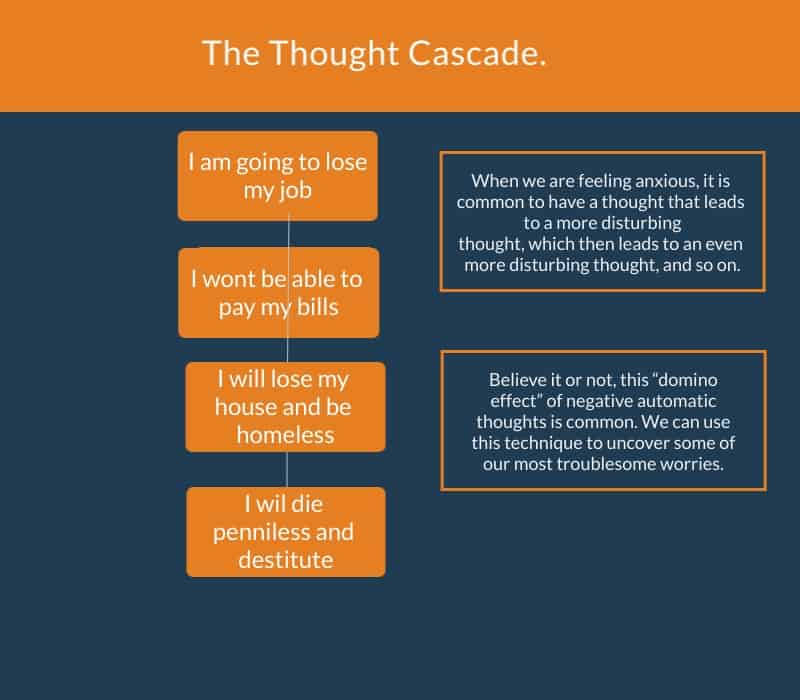
A cornerstone of CBT is identifying and challenging Negative Automatic Thoughts (NATs). These are reflexive, uninvited interpretations of reality that “pop” into a student’s mind. Because NATs often operate at an unconscious level, they can dictate a student’s mood and behavior before the student even realizes it.
The Impact of NATs on Student Behavior
Persistent NATs act as a “negative stream” that can lead to:
Emotional Distress: Increased anxiety, irritability, and low mood.
Academic Barriers: Self-doubt and “performance paralysis.”
Behavioral Outbursts: Anger or withdrawal based on biased interpretations of events.
5 Key Characteristics of NATs
To help students “rewire” their thinking, teachers must first help them identify the five common traits of these thoughts:
Uniformly Negative: They focus exclusively on the worst-case scenario (e.g., “I never do anything right”).
Self-Deprecating: They attack the student’s identity (e.g., “I’m such a failure”).
Self-Sabotaging: They discourage effort (e.g., “I’m bound to fail, so what’s the point?”).
Highly Plausible: To the student, these thoughts feel like “the truth” rather than just a biased perspective.
Inherently Biased: While they feel acceptable, they are almost always distorted, exaggerated, or factually wrong.
Dr. John’s Strategy: The goal of CBT isn’t just to “stop” these thoughts, but to develop Cognitive Restructuring skills—teaching the brain to fact-check these thoughts and replace them with more balanced, rational alternatives.
About the Author
Dr. John Crimmins is a PhD-level psychotherapist and the founder of The Behaviour Institute. With over 25 years of clinical experience specializing in Cognitive Behavioural Therapy (CBT), Dr. Crimmins is a leading authority on integrating mental health strategies into educational environments. He provides evidence-based training and consultancy for schools, educators, and mental health professionals across Ireland and internationally.
Dr John Crimmins
Download the free ebook by Dr John Crimmins
Fill in the form below and we will email the Ebook to you.